
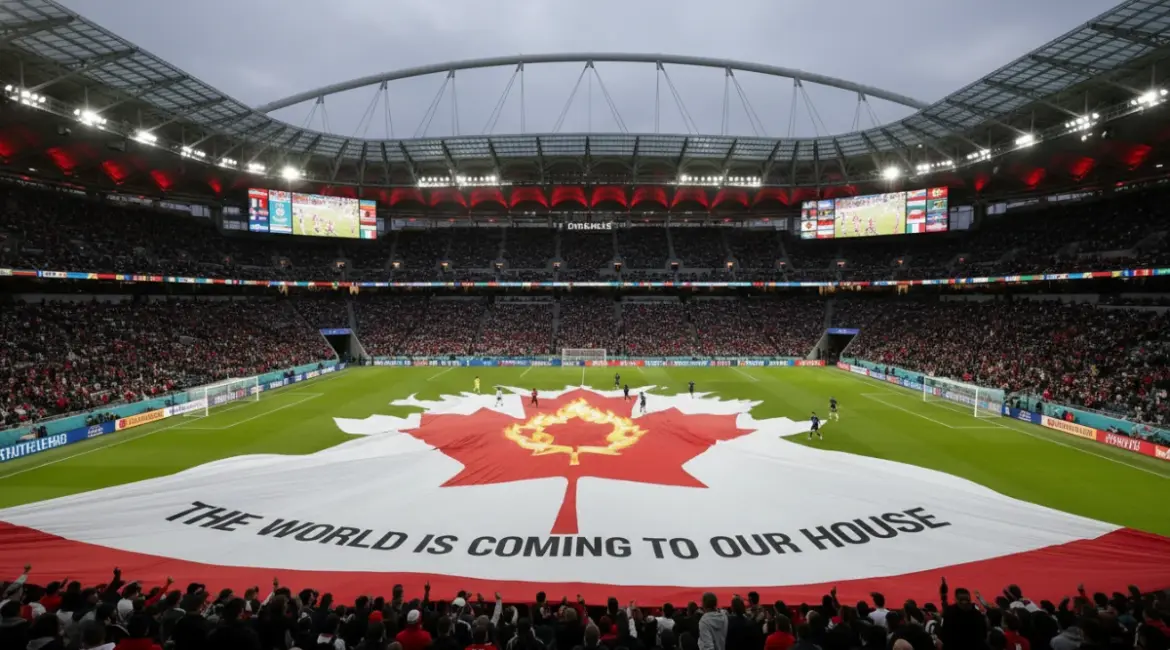
The 2026 FIFA World Cup will feel different from every tournament that came before it. With Canada, Mexico, and the United States sharing hosting duties, the biggest event in soccer is headed straight for North America, where massive stadiums, long travel stretches, and loud crowds will all shape the race for the trophy.
For Canadian fans, the excitement is especially sharp. The hope is obvious: see Les Rouges make real noise on home soil. The reality is just as clear: the title favorite list is packed with teams that arrive with more depth, more experience, and more proven finishers than anyone else in the field.
The teams that set the standard
France sits near the top for a reason. The squad remains loaded at every line, and Kylian Mbappé gives them a match-wrecking star who can change the tone of a game in a few touches. Their midfield control, defensive depth, and tournament temperament make them look built for another long run, even if the North American schedule tests their legs.
Brazil is right there behind them, and the case for the Seleção is easy to understand. The attack can be dazzling, with Vinícius Júnior and Rodrygo giving them pace, flair, and constant threat in transition. What makes them even more convincing is the sense that they have added more structure to the natural creativity that has always defined Brazilian soccer. If that balance holds, they will be dangerous every time they step on the field.
England also belongs in the top tier. The talent level is obvious, and the central figures are exactly the kind of players who can decide a tournament: Jude Bellingham in midfield and Harry Kane leading the line. England’s challenge has never been about whether the roster is good enough. It has been about turning all that ability into calm, ruthless knockout soccer when the pressure becomes heaviest.
Why the chasing group still matters
Argentina enters with the confidence that only a champion can carry. Lionel Messi may no longer be asked to shoulder everything, but his influence still matters, and the supporting cast around him is strong enough to keep the team highly competitive. Julián Álvarez, Alexis Mac Allister, and the rest of the core give Argentina a practical, hard-edged identity that works especially well in tight tournament matches.
Spain offers a different kind of threat. The modern version of La Roja is less predictable and more vertical than the possession-heavy teams of the past, which makes them tougher to contain. Lamine Yamal brings the kind of attacking spark that can tilt a game in an instant, while the rest of the squad blends technical quality with enough pace to punish teams that overcommit.
Germany remains one of the most interesting contenders because their ceiling is always tied to organization. When the structure is right, they can smother opponents, control tempo, and impose a kind of pressure that wears teams down over 90 minutes. After recent disappointments, the German program has every incentive to prove that the old standards still apply.
Portugal is no longer defined by one dominant personality, which may be exactly why this group is so dangerous. Bruno Fernandes, Bernardo Silva, and Rafael Leão create a wide range of attacking options, and the team’s flexibility allows them to adapt to different match states. In a tournament where some favorites become too predictable, Portugal can still surprise opponents with movement, tempo, and depth.
Italy cannot be ignored either. The Azzurri have spent too long outside the World Cup spotlight, and that absence gives them a strong competitive edge: urgency. Their style may not be the flashiest, but the combination of defensive discipline, midfield work rate, and comfort in ugly matches makes them a classic tournament problem for better-known opponents.
The Netherlands bring a similar kind of threat, though with a different personality. Virgil van Dijk anchors a defense that is not easy to crack, and the broader squad has enough athleticism and tactical flexibility to adjust to almost any opponent. The question has never been whether the Dutch can compete with elite teams. The real issue is whether they can turn control into enough goals when the knockout rounds get tight.
Uruguay rounds out the conversation as a team that can make life miserable for anyone. Marcelo Bielsa’s style is built on intensity, pressure, and relentless movement, which means opponents often spend the game reacting instead of thinking. With Darwin Núñez leading the attack, Uruguay has the kind of energy and directness that can break rhythm and create chaos in the best possible way.
What Canada can realistically expect
The home-team question is unavoidable. Canada will have the crowd support, the familiarity, and the emotional lift that come with hosting one of the biggest events in sports. Alphonso Davies gives them a genuine headline star, and his pace alone can force better teams into uncomfortable moments.
Still, the gap between hopeful contender and true favorite is wide. Canada’s best path is probably built on organization, commitment, and the ability to turn home-field energy into a few decisive moments that make a group stage or knockout match feel different from the script. That is difficult, but not impossible, in a tournament where the pressure on bigger nations can become surprisingly heavy.
What makes this World Cup so compelling is that the favorites are not all the same kind of team. Some win with depth, some with pace, some with control, and some with sheer force of personality. That mix should create a tournament full of styles, collisions, and late-game drama across Vancouver, Toronto, and the rest of North America.
For fans in Canada and beyond, the run-up to 2026 promises endless debate about who is most likely to lift the trophy. The safer bet is that the final weeks will be dominated by the usual powers, but the expanded format and the demands of travel could open the door for surprises. That is exactly what makes the countdown so appealing: the giants are favored, but none of them can afford to relax.