
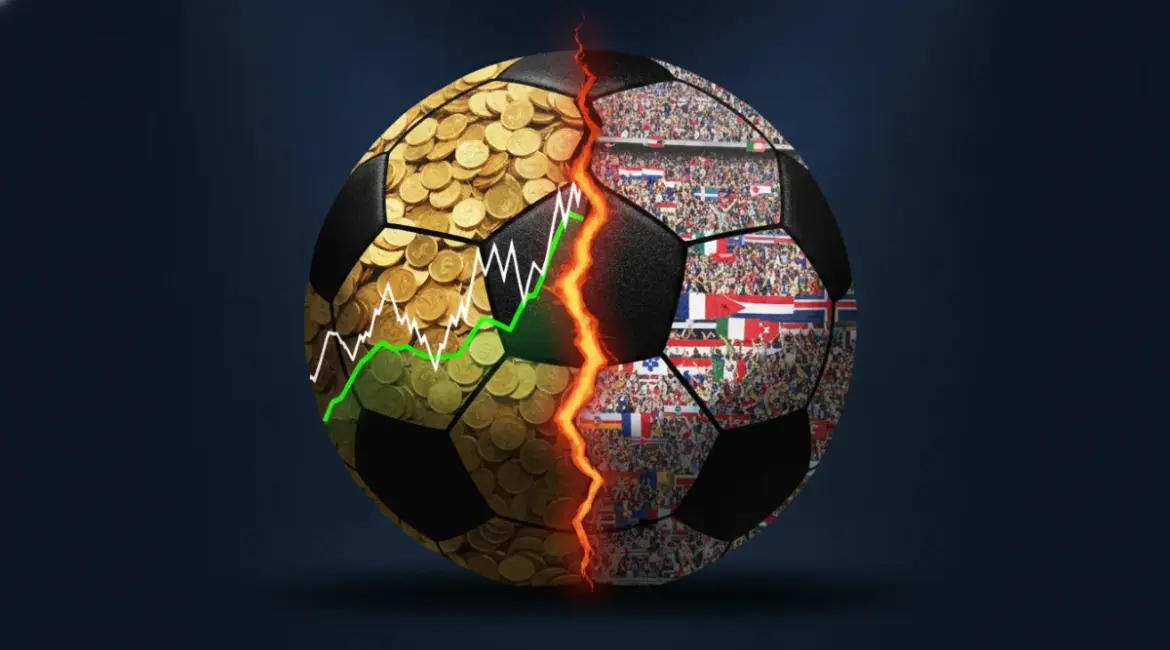
A power struggle that is bigger than one vote
Football’s governing elite is now locked in a fight over control, and the dispute has quickly turned into a test of trust. FIFA president Gianni Infantino has proposed selling minority stakes in World Cup and other major event rights to private investors, a move that has triggered immediate resistance from several of the sport’s biggest regional bodies.
The plan is reportedly tied to Thrive Eternal, an investment fund led by Joshua Kushner, and Infantino gave FIFA’s 211 member federations a September 19 deadline to decide whether they would support it. What might have been framed as a finance strategy instead became a governance crisis almost overnight.
That crisis widened when Europe’s governing body, UEFA, voted unanimously to oppose the proposal and said it would boycott FIFA competitions, including the World Cup, if the plan is not withdrawn. UEFA’s language was unusually forceful, describing the idea as something “conceived in secret” and insisting that the World Cup “is not for sale.”
UEFA’s position carries exceptional weight because it represents the continent’s most powerful leagues and clubs, including the Premier League, La Liga, and Serie A. When Europe moves as one, FIFA cannot treat the dissent as a symbolic protest.
How the resistance spread
- CONCACAF rejected the proposal and criticized the lack of transparency as well as the short timeline for review.
- The Asian Football Confederation backed those concerns and said the situation should worry anyone who cares about the game’s future.
- The AFC also pushed for a broader overhaul of FIFA’s governance structure, signaling that the issue is not only about money.
Mexico has not taken a final position yet and says it needs more time to study the details. Africa, South America, and Oceania have not held their votes, leaving FIFA with several important confederations still on the fence.
FIFA, however, is pressing ahead. In a statement issued Friday, the organization blamed “incorrect media reports” for disrupting its consultation process and said it would continue with the plan. That response only deepened the perception that the governing body is determined to force the issue rather than slow down and rebuild consensus.
The pressure inside FIFA also rose when senior adviser Carlos Cordeiro resigned on Friday over the proposal. His exit suggested that the dispute is not limited to outside critics; it has reached the organization’s own inner circle.
What comes next for Infantino
The immediate stakes are now clear. First, there is the September 19 deadline for member federations to back the plan. Then comes the FIFA Under-20 Women’s World Cup in Poland next month, which could become the first real stage on which this dispute tests tournament cooperation.
There is also a larger political question hanging over the conflict. Infantino had been expected to move smoothly toward a fourth term as FIFA president through 2031, with candidates set to declare by November 18 before a March vote in Rabat. After this week’s backlash, that path looks far less certain than it did just days ago.
If the opposition hardens, FIFA may face more than a public relations problem. It could confront a coalition of confederations that are powerful enough to shape tournaments, influence revenue, and challenge the president’s authority in a way that would be difficult to contain.