
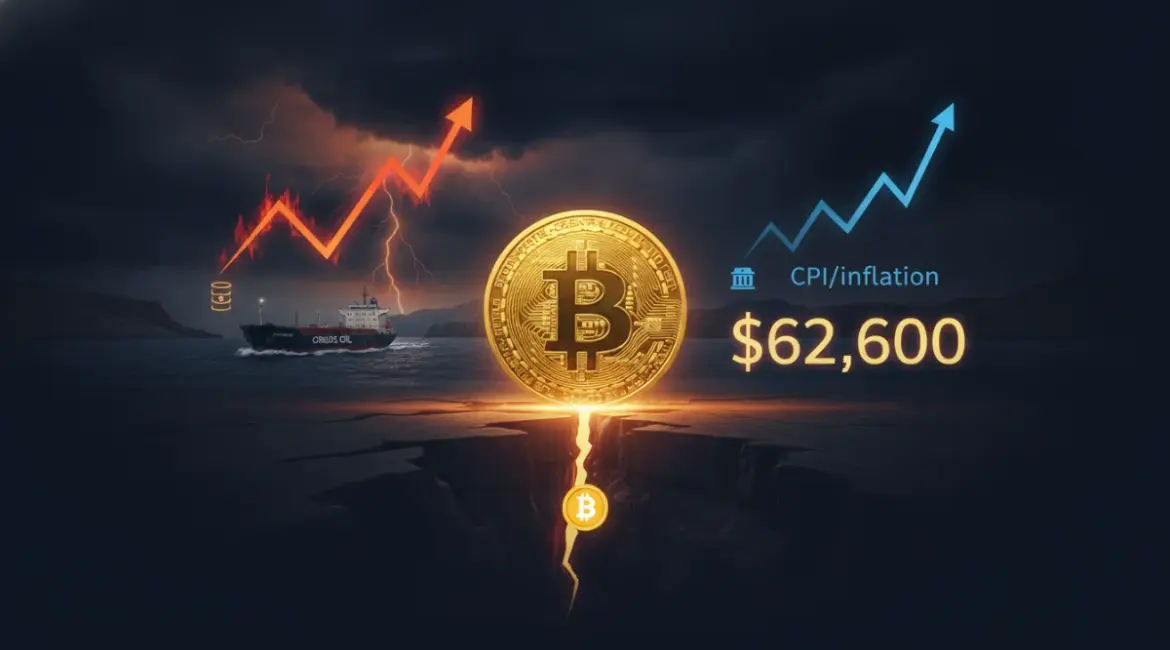
What Happened: Renewed Iran Strait of Hormuz Blockade
On July 11, 2024, the U.S. government reinstated its blockade of Iranian vessels passing through the strategic Strait of Hormuz and imposed a 20% fee on other cargo, reviving a conflict thought settled by a June peace agreement. This action sent Brent crude oil prices up by nearly 2.8%, reaching approximately $85 per barrel, marking a second day of gains.
James Van Straten, a financial analyst, remarked: “The reinstatement of the Strait of Hormuz blockade has disrupted the fragile peace trade that had supported Bitcoin’s recovery earlier this summer. Higher oil prices are stoking inflation concerns and feeding hawkish Fed expectations.”
The move triggered a spike in inflationary pressures, directly challenging the cryptocurrency market’s resilience. Bitcoin, which had recovered from lows near $58,000, faced headwinds as rate-hike odds increased.
Market Impact: Bitcoin and Crypto Prices Amid Rising Inflation Risks
Bitcoin traded near $62,600, down slightly by 0.3% over 24 hours and roughly flat over the past week according to CoinDesk data. Meanwhile, major altcoins exhibited mixed performance. Ethereum hovered near $1,783, modestly up on the week, whereas Solana, XRP, and Hyperliquid declined by more than 5% over seven days.
Cryptocurrency Price Table (July 11, 2024)
The inflation outlook further weighs on market dynamics. According to the CME FedWatch Tool, markets price in a 40% probability of a Fed rate hike in the near term. The 10-year Treasury yield remains elevated above 4.6%, reflecting expectations of continued monetary tightening.
Understanding Inflation Data: What to Expect from the June CPI Report?
The U.S. Consumer Price Index for June 2024 is the next critical test for markets. Headline inflation is forecast to slow to 3.8% year-on-year from 4.2%, with prices expected to fall 0.1% month-on-month. Core inflation, which excludes volatile food and energy prices, is predicted to hold steady at 2.9% annually and rise 0.2% monthly.
Shaurya Malwa, an economist, explained: “A softer-than-expected CPI print could ease Fed rate-hike pressures, potentially stabilizing crypto prices. Conversely, a hotter reading, especially with oil prices climbing, might reinforce hawkish signals and intensify market volatility ahead of the July 28-29 Federal Reserve meeting.”
Broader Crypto Market Trends Amid Macroeconomic Uncertainty
The combination of a geopolitical crisis and looming inflation data is emblematic of the complex environment crypto markets face in 2024. The interplay between rising energy costs, monetary policy responses, and digital asset valuations highlights the sensitivity of cryptocurrencies to macroeconomic fundamentals.
Notably, centralized exchange (CEX) trading volumes rose for the first time in five months in June 2024, with spot volumes increasing 15.3% to $1.11 trillion. Real-World Asset (RWA) perpetual volumes surged to a record $311 billion, suggesting growing investor engagement despite uncertainty.
However, industry leaders express cautious views. The Franklin Crypto Chief Investment Officer noted, “Crypto prices appear disconnected from underlying fundamentals, emphasizing the need for investors to weigh external economic risks carefully.”
Expert Perspectives on Market Direction
Binance.US CEO highlighted ongoing efforts to rebuild and regain U.S. market share after regulatory headwinds, stating: “We are focused on sustainable growth and aiming to return to 20% U.S. market share.”
Meanwhile, TeraWulf’s CEO commented on energy consumption dynamics, “Not all megawatts are created equally in the AI era. The race for efficient crypto mining is becoming increasingly critical.”
These insights underscore the evolving structural and regulatory challenges shaping cryptocurrency adoption and market sentiment.