
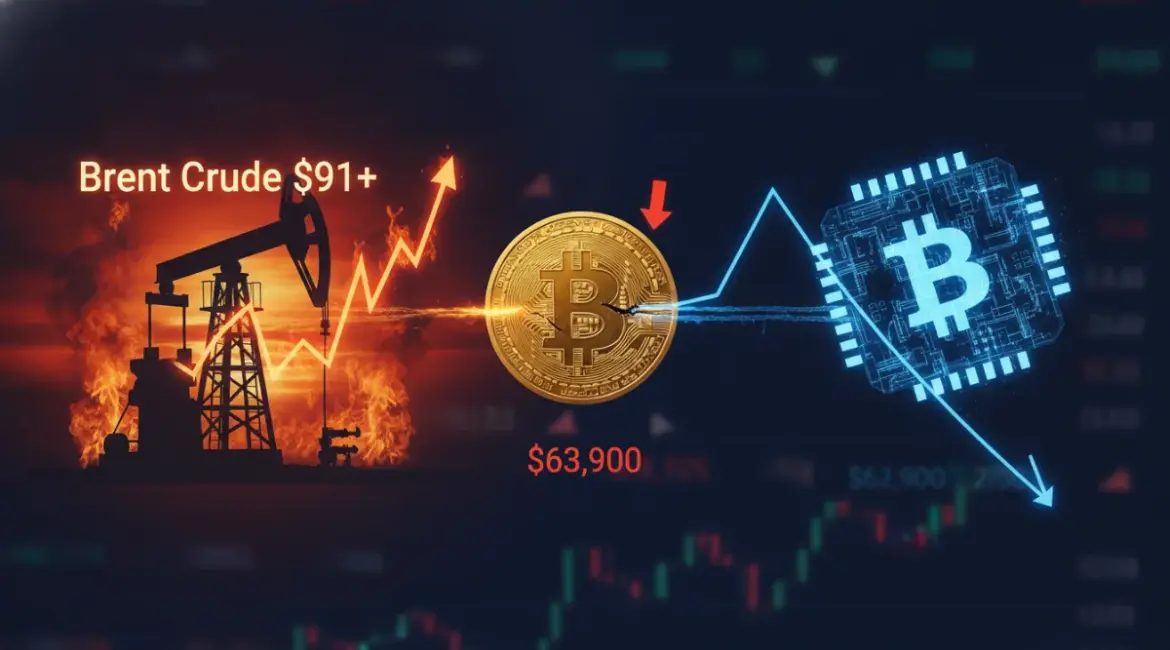
Market Dynamics: Oil Surge Meets AI-Induced Selloff
The cryptocurrency market finds itself caught in the crossfire of contrasting economic drivers. Brent crude oil surged past $91 per barrel, its highest in a month, as escalating strikes between the U.S. and Iran revitalize inflation fears even after softer recent U.S. inflation data. This energy price rally typically fuels worries about broader economic pressure, which weighs on speculative assets like cryptocurrencies.
Concurrently, the tech sector is grappling with a continuing selloff sparked by disappointing AI-related earnings and growth prospects, particularly from Asian chip manufacturers. South Korea’s Kospi index dropped 3.5%, signaling ongoing pressure that extends to crypto due to its perceived tech linkage.
Shaurya Malwa, Crypto Market Analyst at Bullish Inc., stated: “Bitcoin’s recent dip under $64,000 mirrors a tug-of-war between inflation fears driven by oil prices and the tech sector’s uncertainties prompted by AI advancements. This balancing act has investors cautiously positioning their portfolios.”
Cryptocurrency Price Performance: A Closer Look
Ether softened by 1.1%, falling to $1,850, while BNB and XRP also saw modest declines. Notably, Hyperliquid’s HYPE token remains a significant underperformer with an 8% weekly loss, indicating sector specific volatility.
Geopolitical Tensions and Their Ripple Effects
Why Is Oil Rally Impacting Crypto?
The recent U.S.-Iran strikes have led to a spike in energy prices, with Brent crude climbing above $91 a barrel. Historically, rising oil prices can stoke inflationary pressures, raising interest rate expectations and dampening risk appetite among investors. Cryptocurrencies, often viewed as speculative assets, tend to react negatively in such environments.
Economist Dr. Linda Chen from the Global Economic Forum commented: “Inflationary concerns stemming from geopolitical conflicts typically prompt investors to shift away from riskier assets including cryptocurrencies, driving price corrections.”
AI Sector Selloff and Crypto Linkages
The AI technology-driven selloff originated with disappointing performances from major AI chip companies in Asia, notably in South Korea, causing indices like the Kospi to fall sharply. Cryptocurrencies, partly perceived as technology assets, face sentiment spillover effects, exacerbating downward pressure.
As Shaurya Malwa explains: “The AI chip selloff represents a sector rotation and risk recalibration that indirectly affects crypto. Investors reassess exposure to technology innovation across the board, including blockchain and crypto assets.”
Bitcoin ETF Flows and Market Sentiment
Despite the turbulence, bitcoin ETFs have recorded small inflows recently, suggesting some investors see value at these lower price levels. However, these inflows remain modest compared to prior weeks’ outflows, signaling cautious market participation.
CoinDesk Research reports: “ETF inflows are described as ‘peanuts’ relative to the recent exodus, indicating fragility in investor confidence amid ongoing macroeconomic uncertainties.”
Frequently Asked Questions About Bitcoin’s Recent Dip
Why did Bitcoin fall below $64,000 on July 20, 2026?
Bitcoin dropped mainly due to inflation concerns driven by rising oil prices amid U.S.-Iran conflict, combined with continued AI sector selloff affecting tech-linked assets.
How does the oil price increase influence cryptocurrency markets?
Higher oil prices can lead to inflation worries and expectations of tighter monetary policy, which generally reduce investors’ risk appetite, thereby pressuring speculative assets like crypto.
Are AI chip stock selloffs commonly linked to cryptocurrency movements?
While not directly connected, selloffs in tech stocks, especially those related to AI innovation, can impact investor sentiment toward tech-involved sectors, including cryptocurrencies.
What are the prospects for Bitcoin and Ethereum prices in the near term?
Market uncertainty is expected to persist until clear signals emerge on inflation and tech sector stability. Analyst expectations range from cautious consolidation to gradual recovery contingent on macro developments.
Should investors be concerned about cryptocurrency volatility?
Volatility is inherent to cryptocurrencies, especially during macroeconomic stress and geopolitical tensions. Investors should maintain awareness of risks and avoid overexposure.
How significant are the recent Bitcoin ETF inflows?
Recent ETF inflows are modest and suggest tentative buying but not a full turnaround in investor sentiment.
Final Thoughts
Bitcoin’s retreat below the $64,000 mark on July 20, 2026, underscores the fragile equilibrium cryptocurrency markets currently face amid conflicting macro influences. The upward pressure from soaring oil prices amid geopolitical tensions feeds inflation fears, dampening risk appetite, while the lingering AI chip selloff weighs on tech-linked assets broadly. Despite minor inflows into bitcoin ETFs, market participants remain cautious, reflecting broader uncertainties in both energy and technology sectors. Going forward, investors should monitor geopolitical developments, inflation data, and tech sector trends closely as these will likely dictate crypto market trajectories in the near term.