
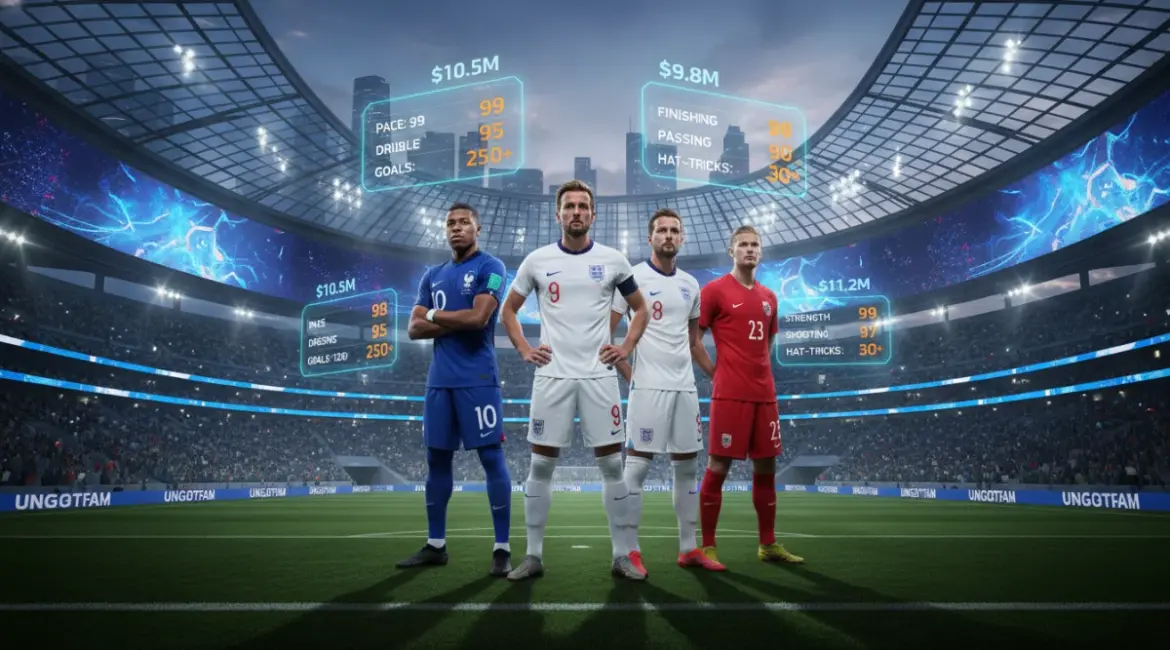
The official fantasy game for the FIFA World Cup 2026 has arrived with Aramco support, giving supporters a fresh way to engage with the tournament before a ball is kicked. Players can build a 15-man roster, chase points across several ranking tiers, and try to outthink rivals with a blend of star power, budget control, and timing.

What Makes the Game Different
This version of fantasy football is shaped around the tournament’s expanding format and the rhythm of international play. Managers start with a $100 million budget and must assemble a balanced squad made up of two goalkeepers, five defenders, five midfielders, and three forwards. That budget rises by $5 million when the knockout phase begins, which gives teams a little more room to chase elite performers later in the competition.
Player prices stay fixed throughout the event, so there is no waiting for values to rise or fall. That single rule changes the entire approach, because success depends less on market movement and more on identifying dependable scorers, defensive bargains, and players likely to stay involved deep into the tournament.
Squad Rules and Transfer Timing
There is also a clear cap on international representation. During the group stage, managers may select no more than three players from any one country, which forces a broader search for value. Unlimited transfers are available before the opening match on Thursday, 11 June, and again before the Round of 32, but later stages return to more standard limits.
Once matches begin, live management becomes important. Users can swap in bench players and change captains during active Matchdays, which adds another layer of decision-making. The available boosters include Wildcard, 12th Man, Maximum Captain, Qualification Booster, and a Mystery Booster that will be revealed before the Round of 32.
How Points Are Earned
Scoring is based on real match events, so the game rewards more than just goals. Minutes played, assists, cards, own goals, penalties won or conceded, tackles, chances created, and shots on target all influence a player’s return. That mix encourages managers to think beyond the obvious goal scorers and look for reliable all-around contributors.
There are also special bonuses. Players can pick up extra points for direct free-kick goals, and a scouting bonus applies when a player owned by fewer than 5% of managers delivers more than four points in a match. That rule creates room for low-ownership differentials to swing contests in a big way.
Big Names at the Top of the Market
The most expensive attackers are unsurprisingly the most recognizable. Erling Haaland, Harry Kane, and Kylian Mbappe sit at the top of the pricing list at $10.5 million each, while Lionel Messi and Cristiano Ronaldo are close behind at $10 million. For fantasy managers, that means the top tier is crowded, expensive, and likely to shape how the rest of a squad is built.
Defensive pricing is led by Portugal’s Nuno Mendes at $5.8 million, while the goalkeeping group features strong options such as Ederson, Alisson Becker, David Raya, and Unai Simon. Those choices matter because savings in defense or goal can open space for one more premium forward.
Why the Market Favors Certain Nations
Pricing across the game closely mirrors the FIFA/Coca-Cola Men’s World Ranking, and that is easy to see in the numbers. The top six nations account for 20 of the 25 most expensive players, with England and France especially deep, each offering five premium selections. In practice, that means the strongest squads tend to come from nations already expected to dominate the tournament conversation.
Historical note: Kylian Mbappé won the adidas Golden Boot at the FIFA World Cup Qatar 2022™. The award began as the Golden Shoe in 1982 and adopted its current name in 2010, recognizing the tournament’s leading scorer while also honoring second and third place with the Silver and Bronze Boots.
Choices Beyond Europe
The Confederation Challenge Leaderboard adds another layer by measuring how different regions perform based on user selections. That makes value from outside Europe especially important for managers who want to climb those broader rankings.
Africa is led by Mohamed Salah at $10 million and Omar Marmoush at $7.8 million. In Asia, Son Heungmin stands out at $7.4 million, followed by Salem Al Dawsari at $7.2 million. Among the host nations in North America, Jonathan David, Raul Jimenez, and Christian Pulisic are all priced at $7 million. Oceania’s main premium option is Chris Wood, listed at $6.5 million as New Zealand returns to the global stage.