
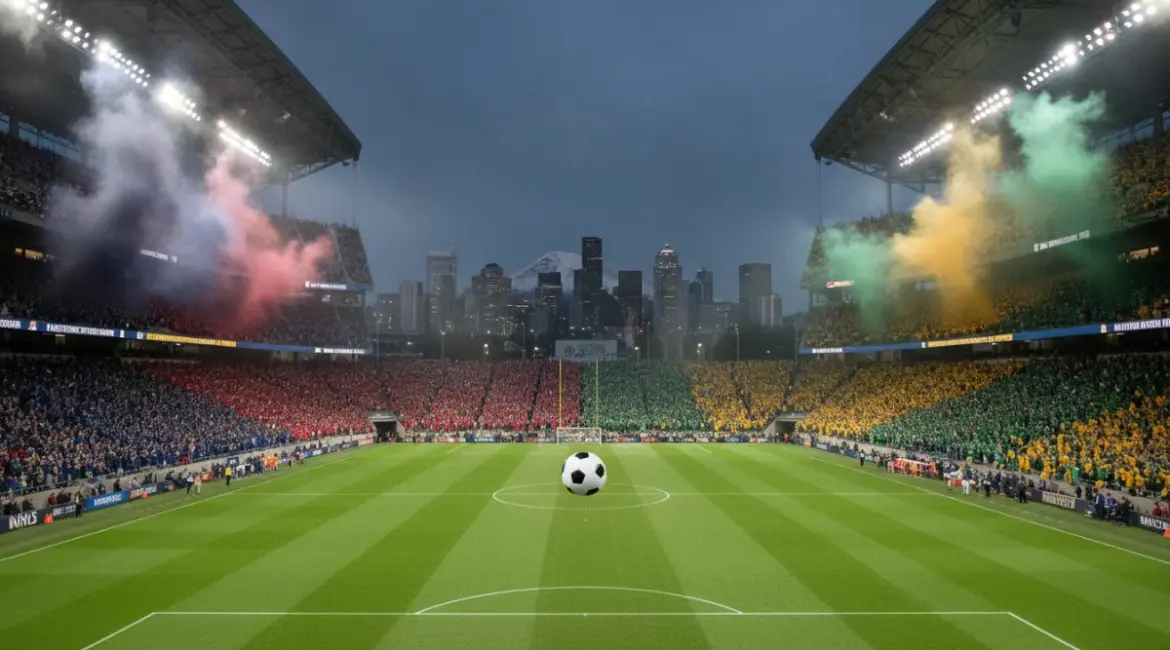
World Cup 2026 | Group D, Matchday 2 — Friday, June 19, 2026 | 3:00 p.m. ET | Lumen Field, Seattle | TSN / CTV
Friday’s meeting in Seattle is more than a high-profile group-stage game: it is a chance for one side to lock up a place in the knockout round, while the other is forced into a tense finish. The United States and Australia both arrive with momentum, and the winner will leave Lumen Field in a powerful position to shape the rest of Group D.
Canadian viewers have an added reason to tune in. This is the kind of match that can reveal who is comfortable under pressure, who can handle a loud crowd, and who might still be standing when the bracket tightens later in the tournament.
Why This Match Has So Much Weight
The U.S. opened with a statement, beating Paraguay 4-1 in its first World Cup match of the campaign. That result gave Mauricio Pochettino’s team control of the group and showcased an attack that moved quickly, combined cleanly, and finished with confidence.
Australia’s opener was just as important, even if it looked different. The Socceroos beat Türkiye 2-0 and proved they can survive long spells without the ball, then punish mistakes when the moment appears.
- Three points would put either team into the round of 32.
- Group control is on the line because both teams entered the day with winning form.
- Momentum matters here, since the team that wins this game can shape the bracket before the final matchday.
What the Openers Revealed
The Americans looked ruthless against Paraguay. The 4-1 margin was their biggest World Cup win ever, and the performance suggested that the side is comfortable playing with pace and intent from the opening whistle. Folarin Balogun scored twice, and Gio Reyna added a highlight-reel finish after a long passing move that stretched the defense to its limit.
Australia’s win in Vancouver was built on discipline and resilience. Türkiye spent much of the night on the front foot, but the Socceroos stayed compact and kept their shape until chances arrived. Tony Popovic’s side did not need to dominate possession to dominate the result.
That contrast creates one of the game’s most interesting tactical questions: can the U.S. impose tempo, or can Australia slow the match into the type of contest it wants?
Pulisic Remains the Big Talking Point
Christian Pulisic is still the central fitness question in the U.S. camp. He was influential early against Paraguay, collecting an assist and driving the attack before leaving at halftime with a calf issue. Since then, he has been limited to individual work, which has kept speculation alive throughout the build-up.
Pochettino has not fully committed to a public decision, saying that the situation remains under review with the medical staff. Even so, the U.S. manager has enough attacking depth to change the shape of the game if needed. Tim Weah, Brenden Aaronson, Gio Reyna, and Alex Zendejas all offer different solutions in the final third.
Tyler Adams tried to calm the concern around his captain, saying Pulisic would be ready. Whether that turns out to be true or not, the U.S. does not appear short on options.
The matchup also carries a hint of memory. When the teams met in Denver last October, Australia’s physical style helped force Pulisic off after less than half an hour. Pochettino has already made clear that his team must stay aggressive without crossing the line.
The Match Within the Match
The most likely battle will be the U.S. possession game against Australia’s compact defending. If the hosts move the ball quickly and win second balls in midfield, they can pin Australia deep for long stretches. Balogun’s movement, Weston McKennie’s power, and Reyna’s creativity give the Americans multiple ways to break a block.
Australia, however, are not built to panic. They can absorb pressure, stay organized, and attack space with speed. Nestory Irankunda brings pace out wide, while Kusini Yengi showed against Türkiye that he can finish when the chance is clean. If the Socceroos keep the game close into the second half, they become a dangerous counterattacking side.
Seattle adds another layer. Lumen Field is expected to be heavily in the Americans’ favor, and the home atmosphere should give the U.S. another boost. The venue has already been a strong one for the Pochettino era side, and Cristian Roldan’s presence only deepens the local connection.
- USA advantage: more attacking depth and stronger control in possession.
- Australia advantage: compact defending and direct transitions.
- Seattle advantage: crowd volume and familiarity with the stadium environment.
What Canadian Viewers Need to Know
For Canadian fans, this is useful scouting as much as entertainment. Canada is competing in the same tournament environment, and both of these teams represent possible future trouble in the knockout bracket. Watching how Australia handles sustained pressure and how the U.S. manages expectation on home soil offers a useful preview of the standards Canada may eventually need to match.
The broadcast will be available in Canada on TSN and CTV, with French coverage on RDS. Streaming options include the TSN App, TSN+, CTV App, and Amazon Prime Video through TSN. Kickoff is set for 3:00 p.m. ET / 12:00 p.m. PT.
From a pure football standpoint, the safest read is that the U.S. should have more of the ball and more ways to win. Australia’s structure may keep the game tight for a while, but the Americans have the cleaner path to controlling field position and creating enough chances to finish the job.
Prediction: USA 2, Australia 0. Balogun remains the most likely scorer, and the U.S. depth should tell after the break. If that happens, the Americans move on with authority while Australia heads into its final group match still needing work to secure qualification.
All times Eastern. Match broadcast on TSN and CTV across Canada.